
Is affordable housing really affordable? — Study of Ghana’s situation by Deloitte

Is affordable housing really affordable? — Study of Ghana’s situation by Deloitte

In Ghana, the housing deficit is significant. According to the Ghana Statistical Service (GSS), it stood at 2 million units in 2022.
This suggests a need for 200,000 units annually over the next ten years, assuming steady population growth and constant supply at prevailing rates.

Home pricing
Increasing permanent income, graduate education, and a growing expatriate population are some major factors affecting the demand for houses in Ghana.

Expatriates inject cash into the economy, increasing the need for modern housing, especially in prime locations and countryside destinations, potentially, pricing out locals.

Ghanaians, prior to recent global and national economic challenges, had been enjoying increased financial stability and rising income levels with a general rise in the middle-income class, leading to aspirations for better living spaces and improved living standards.

Changing family preferences for smaller sizes deepen also the demand for houses. This rise in demand is transforming the landscape of Ghana's housing market.

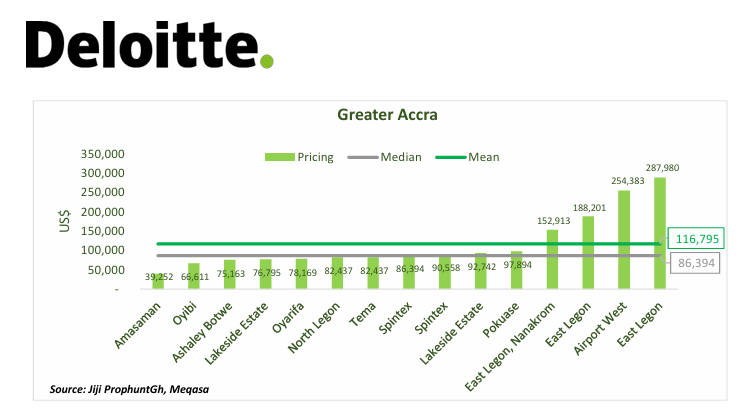
While the pricing of homes varies significantly with factors such as location, size, style, and amenities, typical homes in the country are priced between GH¢200,000 (US$ 16,703) and GH¢ 800,000 (US$ 66,811) for a standard two-bedroom home.

The median price of a 2-bedroom house in Greater Accra and Ashanti Region as of January 2024 stood at GH¢ 1,034,482 (US$ 86,394) and GH¢ 230,000 (US$ 19,208) respectively.

Homes in the Greater Accra Region are relatively more expensive than those in the Ashanti Region. The trend is common for other regions as well with even less expensive homes further away from regional capitals.

The pricing of homes generally is influenced by demand, additional costs linked to features such as quality of material used, finishing, extra architectural features and miscellaneous development costs contributing to price escalations and explain the variation in pricing across regions in Ghana.

Financing home acquisition
Mortgage finance is one typical option for home purchases globally. Mortgages allow for flexible expending on home purchases, spreading payment over a period of ten (10) to twenty-five (25) years.

Mortgage interest rates in Ghana range between 20% and 27% on cedi facilities, depending on the lender, the borrower’s source of income, and the loan tenure.

In Ghana, the mortgage to GDP ratio of 1% indicates low levels of patronage compared to South Africa, Namibia and Cabo Verde, which have mortgage to GDP ratios between 3% to 10% of GDP.

While qualification for mortgage facilities remains a major barrier, the perception of the masses on debt also acts as an inhibiting factor for patronage of mortgages.

Majority of home purchase transactions are funded by equity typically through self-development over an extended period or savings in hard currency.

Other home purchase options include the rent-to-own programme: a structure for civil servants in Ghana which allows buyers to make monthly payments towards the purchase of a home while living in it for a set period and offered an option to buy at the balance of the outstanding value.

The affordable homes campaign
Affordability is pricing that caters for the masses. As of 2023 in Ghana, there were about nine (9) Affordable Housing Projects (AHP) at various stages of completion including; The Asokore Mampong Affordable Housing Project (Completed) the Borteyman Affordable Housing Project (Completed), the Community 26 Kpone Affordable Housing Project (In-progress), the Saglemi Affordable Housing Project (In-progress), the Amasaman Affordable Housing Project (In-progress), the Shai Hills Affordable Housing Project (In-progress), the Gbetsile Affordable Housing Project (In-progress) and the most recent 8,000 Unit Pokuase Affordable Housing Project.

Other private developments seeking to enter AHP space include the Appolonia Bijou Homes Project and Adom City Phases.

The AHPs projects above listed are priced between GH¢ 159,768.40 (US$ 13,343) for studio units and GH¢ 492,619.23 (US$ 41,141) for 3-bedroom homes.

Analysis of affordability thresholds
According to the GSS, over 80% of public sector workers earn less than GH¢3,000 (US$ 251) per month as of February 2023.
Extrapolating this statistic for the average income of Ghanaians, we will for the purpose of this analysis, peg average earnings from all sources at GH¢ 3,000 (US$ 251).

Affordability of housing is best considered on a household basis, using the average household size of 3.6.

According to the United Nations, a household is a small group of persons who share the same living accommodation, pool some or all of their income and wealth, and consume certain types of goods and services collectively, mainly housing and food.

Thus, assuming a minimum household of two (husband and wife) in the working class, the average annual household income using the same base individual income of GH¢3,000 (US$ 251) is estimated at GH¢72,000.00 (US$ 6,013) per annum.

For this analysis, we employ the popular 50/30/20 rule indicating that 50% of household income is spent on essential expenses such as rent, utilities, and groceries, 30% caters for non-essential purchases and wants, and 20% put into a savings account.
Referencing this general rule of thumb, using GH¢72,000 (US$ 6,013) as the average annual household income, it may be implied that the average household can save at most GH¢ 1,200 (US$ 100) monthly and GH¢14,400 (1,203) annually towards acquiring a home, assuming all savings are channeled toward home purchase.

As an analytical safety net of prudence favoring affordability, we assume a further 30% scale-up of annual savings/ disposable incomes per annum for home purchase to GH¢ 18,720 (US$ 1,563).

Thus, keeping inflation and other price and wage adjustments constant, the total save-up period to purchase a standard 2-bedroom valued at GHS 500,000 (US$ 41,757) is estimated at approximately 27 years through the equity purchase route.

Generally, most lenders prefer a borrower's mortgage payment be less than or equal to 40% of their gross income.

Further to the previous example of a standard 2-bedroom valued at GH¢500,000 (US$ 41,757), a cedi mortgage facility with a tenure of 20 years assuming an average interest rate of 21.5% implies a monthly repayment of GH¢9,086 (US$ 759) per month.

Compared to the maximum debt burden of GH¢3,120 (US$ 261), the average household falls short of repayment obligations by 65.7%, rendering them unqualified for mortgage facilities, or overstretched by allocating substantial portions of income towards debt obligations.

For a house to qualify as affordable for the category of citizens, with an annual income of GH¢72,000 (US$ 6,013), given a mortgage tenure of 20 years for cedi-denominated mortgages at an average interest rate of 21.5% the price of the house should fall within the bracket of GH¢ 120,180 (US$ 10,037) and GH¢171,685 (US$ 14,338). This would be the definition of affordable housing in Ghana.

Way Forward
In light of the concerns raised, questioning the true affordability of affordable housing is important. While
commercial institutions in Ghana may not find long-term project investments appealing, the government
could consider perpetual mortgages. This would enable extended repayment periods which, coupled with
favorable interest rates, reduce financial burdens, making home purchases more feasible. Another option
could be exploring affordable renting, providing stable rental prices to investors indefinitely.

Source: Yaw Appiah Lartey, George Anang & Emmanuel Opoku-Bona

Tips for buyers looking to purchase a property

Tips for buyers looking to purchase a property

Tips for buyers looking to purchase a property

Define Your Budget:
Before starting your search, determine a realistic budget. Consider not just the purchase price, but also additional costs like closing costs, property taxes, and potential maintenance expenses.

Get Pre-approved for a Mortgage:
Obtain pre-approval for a mortgage to understand how much you can borrow. This can strengthen your position in negotiations and streamline the buying process.

Identify Your Priorities:
Clearly outline your must-haves and preferences in a property. This could include the number of bedrooms, location, amenities, and proximity to schools or work.

Research Neighborhoods:
Explore different neighborhoods to find the one that best suits your lifestyle. Consider factors like safety, schools, public services, and future development plans.

Work with a Real Estate Agent:
Engage a reputable real estate agent who is familiar with the local market. Their expertise can guide you through the process, help negotiate, and provide valuable insights.

Attend Open Houses:
Attend open houses to get a feel for different properties and neighborhoods. Take notes, ask questions, and envision yourself living in the space.

Consider Resale Value:
Think about the long-term resale potential of the property. Look for features that add value and consider the future marketability of the home.

Inspect the Property:
Hire a professional home inspector to assess the property's condition. This can uncover potential issues that may impact your decision or provide leverage for negotiations.

Understand the Offer Process:
Familiarize yourself with the offer process. Be prepared to make a competitive but reasonable offer, taking into account market conditions and comparable sales.

Negotiate Wisely:
Negotiate with the seller based on the property's condition, market trends, and your priorities. Be open to compromise while ensuring your key needs are met.

Review the Contract Thoroughly:
Carefully review the purchase contract, including contingencies and timelines. Seek legal advice if necessary to ensure you understand and are comfortable with the terms.

Plan for Closing Costs:
Budget for closing costs, which can include appraisal fees, title insurance, and attorney fees etc. Knowing these costs upfront will help you avoid surprises at closing.

Stay Informed About Market Trends:
Stay updated on local real estate market trends. This knowledge can empower you during negotiations and assist in making informed decisions.

Be Patient:
The home-buying process can take time. Be patient and persistent, and don't settle for a property that doesn't meet your criteria.

Remember, each real estate transaction is unique, so adapt these tips to fit your specific circumstances and local market conditions.

9 Tips to Style Your Apartment to Sell

9 Tips to Style Your Apartment to Sell

98% of agents say that styling can make a big difference when you are selling. It can help to add value, attract more buyers, and help your property sell faster. So if you are selling, this is a critical step to make the most out of what you’ve got.
Not all of us live in a large family-sized house – and many of us don’t want to – but when it comes to selling, the same principles apply. Buyers want rooms to feel spacious and light, they want the apartment to be functional and have usable living spaces. Buyers love outdoor areas and privacy and they want to feel the apartment has been well-maintained and loved. Of course, you could hire a pro, but if you want to do it yourself here are some tried and true tips to help you prepare your apartment for a profitable and fast sale.
1. Create a great first impression
Setting the stage for a great first impression of your home is crucial in attracting potential buyers. Elevate your curb appeal and initial impact by focusing on your front entranceway and home exterior.
A well-kept garden and mowed lawns will make your home look cared for. Prioritise cleanliness and upkeep across your property. A freshly painted front door will instantly rejuvenate. Consider replacing scratched or worn-out handles to impart a polished look that contributes to the overall impression of care and maintenance.
A strategically placed potted plant or two can add a touch of vibrancy and charm, while a quick sweep or mop can work wonders in enhancing the overall appeal of your private or shared entranceway.
Remember, a well-maintained exterior not only entices potential buyers but also communicates a sense of pride in homeownership, instilling confidence in the property's upkeep and care.
2. The kitchen – the room that sells
The kitchen is the one room that can make or break a sale. Often regarded as the heart of the house, the kitchen holds a lot of potential to sway buyers and significantly improve your selling chances. Investing effort in optimising this space is crucial.
The importance of decluttering cannot be overstated – especially in smaller spaces like apartments. Clearing kitchen benches of unnecessary items instantly creates the illusion of space and cleanliness. If you are short on bench space or cabinetry, consider utilising kitchen storage racks or organisers that can be attached to the wall to make the most of your small kitchen area.
For tired-looking cabinet doors, there are plenty of options beyond a costly replacement. Simple upgrades like switching outdated knobs and handles with modern fixtures are a cost-effective facelift.
Consider updating old appliances, particularly the fridge or dishwasher. Modern, efficient appliances can enhance the overall appeal of the kitchen while giving buyers the promise of convenience and energy cost savings.
Of course, never underestimate a fresh coat of paint! Sticking to neutral tones can widen the appeal, allowing buyers to envision their own style. Simple home staging touches such as a bowl of fresh fruit on your kitchen bench can help improve the appeal, also.
3. Define your living space and create the feeling of space
To style your home to sell, your aim is to make your apartment seem as big as possible and to create as much visual floor space as you can. This will have a great impact on how big the apartment feels and the overall flow of your home’s layout. By ensuring you have a clearly defined living area, dining, outdoor, office spaces, bedrooms, etc., will help create order and the perception of space.
Aside from decluttering, strategic furniture placement can make a difference. Arrange furniture strategically to delineate distinct zones within your apartment. You can use furniture as a tool to create natural pathways and highlight the purpose of each area.
Consider using multi-functional or modular furniture pieces that serve dual purposes. For instance, a sofa bed in the living area can double as a guest sleeping space.
Consistent flooring and a harmonious colour palette create a seamless flow between rooms, contributing to the perception of a larger, well-connected space.
4. Use neutral colours on the sofa
To help your living room feel larger, a styling trick interior designers use is to use neutral colours on your sofa. If your sofa is a similar tone to the walls it will blend in and not dominate the space. Also, by using shades of one colour in a room, it will create cohesion and make a room feel more open. As there is little contrast in the room the buyer will be able to look through the room uninterrupted, creating the illusion of space. You can add interest with different textural elements such as cushions, throws, and rugs.
5. Make the most of the outdoors
The outdoor space can be a strong selling point. Aussies love being outdoors, so if you have a balcony or a courtyard make the most of it. Is there room to add a full table setting and chairs? By adding this, not only will it make your balcony feel larger, it will create an extra outdoor living area which is very appealing to buyers.
If you don’t have the amount of space to fit a full outdoor setting, consider adding a small table and a couple of chairs with a colourful pot plant happily placed on the table. You may also try a vertical wall garden or a planter box for extra greenery. The aim here is not to just bring the outdoors in, but to also help prospective buyers project themselves.
By simply popping a colourful planter box on your balcony along with a comfy chair, buyers can instantly picture themselves sitting there with their morning coffee. This is a trick that professional stagers do to create an emotional connection between potential buyers and your property. They understand that people make decisions based on emotions. So by adding those little touches, you create a more inviting space that buyers would be happy to call home.
6. Use a mirror to create feeling of space and light
Adding a mirror can instantly make a room feel more spacious. They help reflect light which helps make the room look brighter and can give the illusion of another light source in the room. For small spaces mirrors can give the appearance of more space as it reflects the room making buyers feel that it is larger than it actually is. Incorporating reflective surfaces like glass or polished materials can also contribute to this effect.
On the subject of light, emphasising natural light in an apartment will greatly improve your selling chances. You can maximise natural light by keeping windows clear of heavy drapes or blinds during viewings. Ensure windows are clean inside and out; allowing unobstructed light to filter through. Place mirrors strategically across from windows or in areas where they can reflect natural light deeper into the apartment. If your apartment has outdoor views, ensure any foliage or trees outside the windows are trimmed to allow maximum light penetration.
7. Get bold with your artwork
This may be the opposite of what you think, but surprisingly a bold painting on the wall has the ability to make a room feel more expansive unlike several smaller pieces that can have the effect of cluttering up the space. The key lies in selecting the right painting that complements the room's style and dimensions so as not to overwhelm the room. Placing the painting strategically, such as on a prominent wall or as a focal point upon entering the room, can draw the eye and give the impression of a larger space. Additionally, the colours and mood of the painting can influence the perceived ambiance of the room. Bright, uplifting colours or serene landscapes can create an atmosphere that feels more open and inviting.
8. Create a bit of luxury in the bathroom
One of the best styling techniques for home selling is to refresh the bathroom. Enhancing your bathroom with a touch of luxury can create a spa oasis that feels and looks lavish. You don’t have to invest a lot of money to do this.
Clean your tiles and grouting and make sure your windows, mirrors, and shower screens are spotless and free of streaks. Hairs in the drains are a real put-off, so check these before you open your home to buyers.

Elevate the ambiance with luxurious additions such as fresh, plush towels, opting for fragrant liquid soap over traditional bars, adding scented candles to shelves and countertops, small potted plants, or a single fresh-cut flower in a stylish vase. If you have a bathtub, purchase a bath caddy and top it with a book, candle, and bath salts to add a sense of indulgence that appeals to prospective buyers.

If you have a small bathroom, don’t clutter the limited wall space with towel rails, put them on the back of the door. If you have the budget, adding a big mirror will help ensure the room appears twice the size. If you keep the colour scheme simple it will help give your bathroom that wow factor. On a final note, stained or chipped bathtubs and basins detract from that lush feel, so consider getting these re-enameled. Lastly, if your tiles are looking a bit tired, a fresh coat of tile paint on the walls will give the impression of a whole new bathroom.
9. Create space and sanctuary in your bedroom
After the number of bedrooms, buyers are most interested in room size. This can be difficult to address in smaller apartments, however, there are ways to maximise even the tiniest of rooms.
Use neutral colours to make your bedroom/s seem larger. Reduce the amount of furniture to maximise the feeling of space. For instance, if you have a small room, use a double bed instead of a queen or bunk bed in the kid’s rooms.

Storage in the bedroom is another feature buyers look for. To reduce the demands on limited space in small bedrooms, consider installing built-in robes, but keep the interior simple because if you include all the bells and whistles you won’t recoup the costs.
Mounting shelves, desks, or nightstands on walls instead of using floor-standing options can free up floor space and give the room a more open feel.
Utilise vertical space by installing tall bookshelves, wall-mounted shelves, or hanging organizers. Vertical storage helps declutter and keeps essential items within reach without occupying precious floor area.

However large your bedrooms are, they will look small if they are cluttered with your personal knick-knacks. When it comes time to sell make sure you clear away the clutter and personal items such as photos. That doesn’t mean your rooms need to look totally impersonal, a few exotic perfume bottles, a vintage tea cup by the bed, or a romantic candle display can make the room feel like home for potential buyers.
Finally, during viewings, demonstrate various configurations of the space to showcase its versatility. For example, you may have a washer and dryer in a cupboard or a benchtop extension. This helps buyers visualise different layouts and possibilities for the room.

Your Guide to Choosing the Perfect Real Estate Agent

Your Guide to Choosing the Perfect Real Estate Agent

Are you gearing up to sell your property? Finding the right real estate agent is paramount to achieving the best results for your most valuable asset. Here's what to look for when selecting a real estate agent to sell your property:

 1.⁠ ⁠*Qualified Professionals*: Ensure that the real estate agents you consider are properly licensed and qualified to sell property.

 2.⁠ ⁠*Local Expertise*: Choose an agent who has in-depth knowledge of the area where your property is located. Local agents understand the market dynamics, recent sales, and buyer demographics in your neighborhood.

 3.⁠ ⁠*Experience Matters*: Look for agents with a proven track record of successful sales within the past 12 months. An experienced agent can offer valuable insights and guide you through the selling process effectively.

 4.⁠ ⁠*Market Understanding*: Your agent should have a solid grasp of current market conditions and be aware of factors that could impact your property's value, such as upcoming developments and local amenities.

 5.⁠ ⁠*Digital Presence*: A strong digital marketing strategy is essential for reaching a wider audience of potential buyers. Make sure your agent utilizes online platforms, social media, and other digital tools effectively.

 6.⁠ ⁠*Trust and Professionalism*: Choose an agent who is honest, trustworthy, and professional in their dealings. Request references and speak with past clients to gauge their satisfaction with the agent's services.

 7.⁠ ⁠*Communication Skills*: Effective communication is crucial throughout the selling process. Find an agent who listens to your concerns, provides regular updates, and keeps you informed about open inspections and offers.

 8.⁠ ⁠*Marketing Strategies*: Inquire about the agent's marketing strategies beyond traditional listing portals. A comprehensive marketing campaign should include digital channels, print media, and targeted advertising to maximize exposure for your property.

10.⁠ ⁠*Personal Connection*: Finally, choose an agent whom you feel comfortable working with and who understands your goals and priorities. A strong personal connection can lead to a smoother and more successful sales experience.

By considering these important qualities, you can find the perfect real estate agent to sell your property and achieve your desired outcomes. Take the time to research and interview multiple agents to ensure you make an informed decision.

Reach out to us today,

10 Expert Tips for Staging Your Property Like a Pro

10 Expert Tips for Staging Your Property Like a Pro

Are you preparing to sell or rent out your property? Staging plays a crucial role in presenting your space in the best possible light to potential buyers or renters. Here are 10 expert tips to help you stage your property like a pro:

 1.⁠ ⁠Clear the Clutter: Start by decluttering the space to create an open and inviting atmosphere. Remove any unnecessary items, including personal belongings, excess furniture, and knick-knacks.

 2.⁠ ⁠Create a Blank Canvas: Depersonalize the apartment by minimizing family photos and memorabilia. This allows visitors to envision themselves living in the space.

 3.⁠ ⁠Sparkling Clean: Ensure every inch of your property is spotless. Pay attention to details such as grout lines, light fixtures, and appliances to make a lasting impression.

 4.⁠ ⁠Optimize Space: Arrange furniture to maximize the perceived space in each room. Keep pathways clear and ensure there's plenty of room to move around comfortably.

 5.⁠ ⁠Highlight the Best: Showcase the property's standout features, such as architectural details, beautiful views, or abundant natural light. Arrange furniture and decor to draw attention to these focal points.

 6.⁠ ⁠Neutral Elegance: Choose neutral colors for walls, furniture, and decor to appeal to a wider range of tastes. This creates a versatile backdrop for potential buyers or renters to imagine their own style in the space.

 7.⁠ ⁠Set the Mood: Create a warm and inviting ambiance with lighting, soft furnishings, and tasteful decor. Consider adding fresh flowers, candles, or accent lighting to enhance the overall atmosphere.

 8.⁠ ⁠Curb Appeal Matters: Make a great first impression by sprucing up the exterior of the property. This includes landscaping, a fresh coat of paint, welcoming entryway decor, and attention to outdoor living spaces.

 9.⁠ ⁠Modernize with Finishes: Update outdated fixtures, hardware, and finishes to give the property a more contemporary look. Replace old light fixtures, faucets, cabinet hardware, and switch plates as needed.

10.⁠ ⁠Thoughtful Accents: Add stylish touches through carefully chosen accessories like throw pillows, area rugs, artwork, and decorative accents. Be mindful not to overcrowd the space and maintain a balanced aesthetic.

By implementing these expert tips, you can stage your property like a pro and attract potential buyers or renters. Remember, staging is all about showcasing your property's best features and helping visitors envision themselves living there. With a little effort and attention to detail, you can make a lasting impression and increase your chances of a successful sale or rental.

Reset password

Enter your email address and we will send you a link to change your password.

Get started with your account

to save your favourite homes and more

Sign up with email

Get started with your account

to save your favourite homes and more

Powered by Estatik

Write a review